
Quick Answer
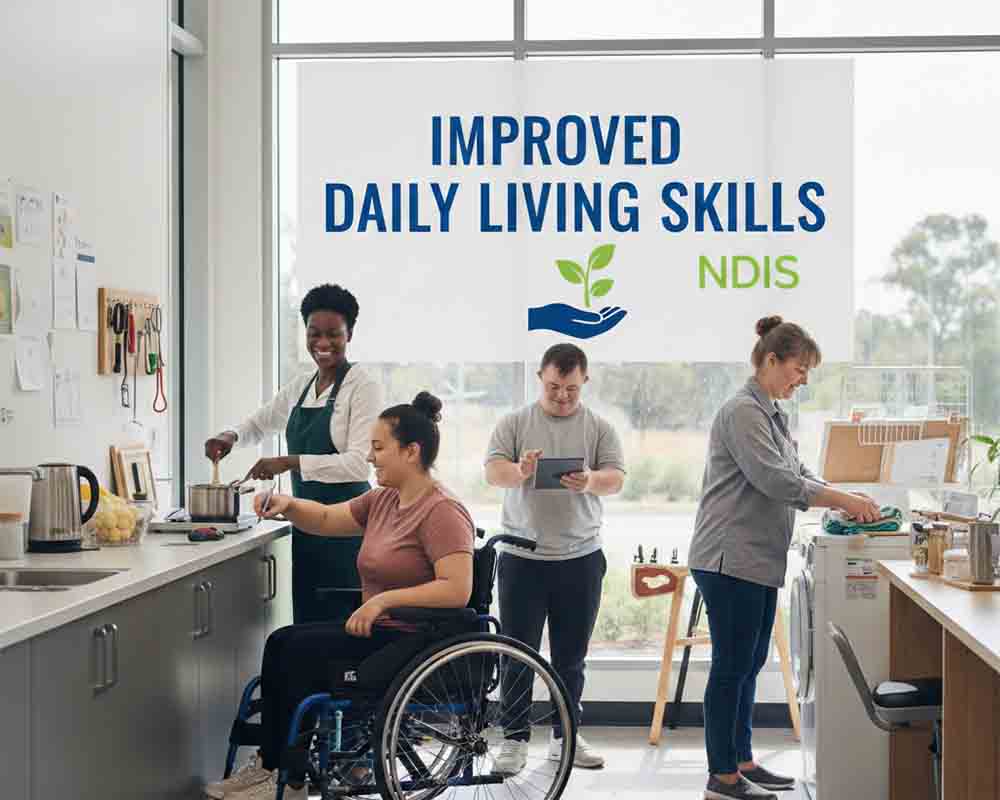
Improved Daily Living Skills NDIS is a Capacity Building support category that helps NDIS participants become more independent through therapy and skill-building programs. It may include occupational therapy, speech therapy, physiotherapy, psychology, and other allied health services. This funding supports goals like communication, mobility, personal care, emotional wellbeing, and daily routines. It is commonly used in Melbourne, Werribee, Laverton, and Western Suburbs Melbourne.
Introduction
Many NDIS participants need more than daily assistance. In addition to support, they often need therapy and structured skill training to improve over time.
Because of this, Improved Daily Living Skills funding is an important part of many NDIS plans.
This support helps participants build practical skills for daily life. For example, it may improve communication, personal care, mobility, emotional wellbeing, and routine planning. In Victoria (VIC), especially Melbourne and surrounding suburbs, many children, adults, and seniors use this funding to build long-term independence.
In this guide, you will learn what Improved Daily Living Skills NDIS includes, who it is for, how it works, and how to use it effectively.
What Is Improved Daily Living Skills NDIS?
Improved Daily Living Skills NDIS is a support category under Capacity Building that helps participants improve their functional skills and independence.
Instead of offering only short-term help, this support focuses on building long-term skills that improve daily living. Over time, participants can become more confident, capable, and independent.
Improved Daily Living Skills may support areas such as:
- Personal hygiene and self-care
- Cooking and meal preparation
- Communication skills
- Social interaction and confidence
- Managing emotions and behaviour
- Mobility and movement skills
- Routine planning and organisation
- Skills for work or community participation
Improved Daily Living NDIS (Capacity Building) Explained
The NDIS has several funding categories, and each category has a different purpose. Improved Daily Living sits under the Capacity Building Supports budget.
Capacity Building funding is designed to help participants build skills rather than only receive ongoing support. Therefore, Improved Daily Living is one of the most valuable support categories for long-term progress.
Most importantly, this funding supports improvement in:
- Physical abilities
- Thinking and learning skills
- Communication skills
- Emotion control skills
- Daily routine management
- Social interaction
- Functional independence
As a result, many participants in Melbourne and the Western Suburbs use this category for therapy-based supports that create real-life improvement.
Who Can Use NDIS Improved Daily Living Skills Support?
Improved Daily Living funding can support many different participants. However, the supports must match the participant’s disability needs and NDIS plan goals.
For example, it is often used by participants with:
- Autism Spectrum Disorder (ASD)
- Intellectual disability
- Psychosocial disability
- Physical disability
- Speech or communication difficulties
- Developmental delay
- Neurological conditions
- Mental health-related functional challenges
In addition, this funding can support children, teenagers, adults, and older participants, depending on their daily challenges and long-term goals.
NDIS Improved Daily Living Supports List (What’s Included?)
The NDIS Improved Daily Living supports list includes therapy and training services that help participants improve daily living skills.
Below are some of the most shown supports funded under this category.
1. Occupational Therapy (OT)
Occupational therapy is one of the most common services funded under Improved Daily Living. It helps participants build independence through daily skill training.
For example, OT may support:
- Dressing and self-care routines
- Sensory regulation strategies
- Home safety recommendations
- Fine motor skill development
- Daily task planning and structure
As a result, participants can manage everyday tasks with more confidence.
2. Speech Therapy
Speech therapy supports communication, language development, and swallowing issues. It is especially helpful for participants who struggle with speaking clearly or understanding others.
Speech therapy may help with:
- Speech clarity
- Understanding and using language
- Social communication skills
- Augmentative and alternative communication (AAC)
- Confidence in conversations
Because communication affects many parts of life, speech therapy is often linked directly to NDIS plan goals.
3. Physiotherapy
Physiotherapy supports mobility, balance, strength, and safe movement. It is helpful for participants who want to improve physical independence.
Physiotherapy may support:
- Walking and posture improvement
- Muscle strength building
- Pain management
- Safe movement strategies
- Physical confidence in daily life
Over time, physiotherapy can help participants become more active and independent.
4. Psychology and Behaviour Support
Psychology services help participants manage anxiety, emotional challenges, and behaviour concerns. This is important for participants who struggle with stress, emotional control, or mental health difficulties.
Psychology support may include:
- Counselling
- Therapy for emotional wellbeing
- Trauma support
- Confidence-building strategies
- Social skill development
As a result, participants often feel calmer and more stable in daily life.
5. Dietitian Support
Dietitian services support participants who need help with food planning, healthy eating, or managing health conditions.
Dietitian support may help with:
- Weight management
- Diabetes support
- Autism-related food sensitivities
- Meal planning for independence
- Nutrition education
In many cases, this support helps participants develop healthier routines.
6. Skill Development Programs
Many providers offer daily living skill programs under Improved Daily Living. These programs focus on practical skills that support independence.
Skill development programs may include:
- Cooking and meal preparation
- Budgeting and shopping skills
- Hygiene routines
- Community participation training
- Household management
These programs are effective because they provide hands-on learning in real situations.
Improved Daily Living Skills Occupational Therapy NDIS
Occupational therapy is one of the most widely used supports under Improved Daily Living. It focuses on helping participants complete everyday tasks safely and confidently.
OT may help with:
- Showering and personal care routines
- Using assistive tools or adaptive equipment
- Learning independent living strategies
- Creating sensory regulation plans
- Building skills at home, school, or work
- Home safety recommendations
In Werribee, Laverton, and Western Suburbs Melbourne, OT is commonly used for both children and adults to support long-term independence.
Improved Daily Living Skills Speech Therapy NDIS
Speech therapy under Improved Daily Living helps participants improve communication and build confidence in daily interactions.
This support can include:
- Speech development
- Improving conversation skills
- Social communication (especially for autism)
- Supporting non-verbal communication
- AAC device training
- Support for swallowing difficulties
Because communication plays a major role in daily life, speech therapy is often essential when NDIS goals include participation in school, work, or community activities.
NDIS Daily Living Skills Support: Real Examples
Many participants want to understand what Improved Daily Living supports look like in real life. Below are common examples of how these services may be delivered.
Example 1: Cooking and Meal Skills
A participant may work with an OT to learn:
- Simple meal preparation
- Safe use of appliances
- Grocery shopping planning
- Creating a weekly meal routine
Example 2: Communication Training
A participant may work with a speech therapist to:
- Improve speech clarity
- Practice social conversation
- Learn to use an AAC device
- Build confidence in public settings
Example 3: Personal Hygiene and Routine Building
A participant may develop routines such as:
- Shower schedules
- Tooth brushing habits
- Dressing independently
- Time management skills
Example 4: Emotional Regulation Skills
A participant may work with a psychologist to:
- Manage anxiety
- Reduce meltdowns
- Learn calming techniques
- Improve social behaviour
These examples show how Improved Daily Living supports can create practical improvements over time.
NDIS Daily Living Skills Program (How It Works)
An NDIS daily living skills program is usually delivered in a structured and step-by-step way. This helps participants learn new skills while tracking progress.
Most programs include:
Step 1: Assessment
First, the therapist assesses the participant’s current skills, challenges, and daily needs.
Step 2: Goal Planning
Next, a support plan is created based on the participant’s NDIS goals.
Step 3: Training and Practice
After that, the participant receives skill-building support through therapy sessions or structured training.
Step 4: Monitoring Progress
Progress is tracked regularly, and adjustments are made if needed.
Step 5: Reporting for NDIS
Finally, therapists provide progress reports that support plan reviews and future funding requests.
Because this process is measurable, Improved Daily Living funding is often very effective for long-term improvement.
Improved Daily Living Skills NDIS Funding (What It Covers)
Many people ask what Improved Daily Living Skills NDIS funding can pay for.
In most cases, this funding can cover:
- Therapy sessions (OT, speech therapy, psychology, physiotherapy)
- Functional assessments
- Progress reports for plan reviews
- Skill development programs
- Therapy plans and goal tracking
- Proven therapy methods
- Supports focused on independence
However, funding depends on the participant’s NDIS plan and the goals written in their plan.
NDIS Improved Daily Living Goals Examples
To access the right supports, your goals must clearly match your needs. Strong goals also make plan reviews easier.
Here are common NDIS Improved Daily Living goals examples:
Daily Living and Self-Care Goals
- Improve personal hygiene and grooming routines
- Learn to dress independently
- Build confidence in meal preparation
Communication Goals
- Improve communication skills in social settings
- Develop speech clarity and conversation skills
- Learn to use communication devices effectively
Mobility Goals
- Improve balance and walking ability
- Build strength to reduce falls
- Increase physical independence at home
Social and Emotional Goals
- Improve emotion control skills
- Reduce anxiety during community participation
- Build confidence in social interaction
Independent Living Goals
- Learn budgeting and shopping skills
- Improve time management
- Develop daily routine planning skills
These goals are commonly used by participants in Melbourne and Western Suburbs Melbourne to justify therapy and daily skill development funding.
What Is Improved Daily Living Skills NDIS (For Parents and Families)?
Parents often ask if Improved Daily Living is only for adults. However, children can also benefit greatly from this support category.
Children can use Improved Daily Living funding for therapies that support:
- Developmental milestones
- Speech and communication improvement
- Sensory regulation and behaviour support
- Social interaction and learning skills
- School readiness development
Because early intervention creates long-term progress, Improved Daily Living is very popular for children.
How to Claim Improved Daily Living NDIS
Many participants ask how claiming works. Claiming depends on how your plan is managed.
If Your Plan is NDIA-Managed
In this case, the provider claims directly through the NDIS portal. Most importantly, you usually do not pay upfront.
If Your Plan is Plan-Managed
With a plan-managed arrangement, the provider sends invoices to your plan manager. The plan manager then pays the provider.
If Your Plan is Self-Managed
For self-managed plans, you pay the provider first. After that, you submit the invoice and claim reimbursement.
Simple Claiming Checklist
To claim Improved Daily Living supports, make sure:
- The provider is approved for NDIS services
- The support matches your NDIS plan goals
- The invoice includes correct support item codes
- You stay within your allocated budget
Improved Daily Living Skills Training NDIS: Best Practices
To get the best results from your funding, it is important to use supports consistently.
Here are practical tips to maximise your outcomes:
- Choose therapists who provide progress reports
- Set goals that are clear and measurable
- Ask for a structured therapy plan with milestones
- Practice skills at home between sessions
- Track improvements monthly
- Collect evidence for your plan review
When supports are used correctly, participants often achieve strong long-term results.
Pros and Cons of Improved Daily Living NDIS
Understanding the benefits and limitations can help you use your funding wisely.
Pros
- Supports long-term independence
- Covers OT, speech therapy, physio, and psychology
- Helps build confidence and daily routines
- Provides professional reports for plan reviews
- Improves participation in school, work, and community life
Cons
- Progress may take time
- Some therapies require regular attendance
- Funding depends on clear NDIS goals
- Some services may have waitlists in busy areas
Common Mistakes People Make (Avoid These)
Many participants miss out on better outcomes due to small mistakes. Fortunately, these issues are easy to avoid.
Common mistakes include:
- Writing unclear daily living goals
- Choosing supports that do not match plan outcomes
- Not requesting therapist progress reports
- Using funding too quickly without tracking results
- Not understanding plan-managed vs self-managed claiming
- Not preparing evidence for plan review
By avoiding these mistakes, participants can maximise their Improved Daily Living Skills support.
Improved Daily Living Skills Support in Melbourne, Werribee and Laverton
If you live in Melbourne, Werribee, Laverton, or Western Suburbs Melbourne, Improved Daily Living supports are widely available through local allied health providers.
This is helpful because participants can access:
- In-home therapy support
- Clinic-based services
- Community-based training programs
- School or workplace therapy support
In addition, local providers understand NDIS processes and can support you with progress reports for plan reviews.
Improved Daily Living Supports and Outcomes
The table below shows common Improved Daily Living supports, what they help with, and expected outcomes.
| Support Type | What It Helps With | Example Outcome |
|---|---|---|
| Occupational Therapy | Daily routines, independence, sensory needs | Improved self-care skills |
| Speech Therapy | Communication and language | Better social interaction |
| Physiotherapy | Mobility and strength | Reduced falls and safer movement |
| Psychology | Emotional wellbeing and behaviour | Less anxiety and better coping skills |
| Dietitian | Nutrition and meal planning | Healthier eating routines |
| Skill Programs | Cooking, shopping, budgeting | Improved independent living |
FAQs
1. What is Improved Daily Living Skills NDIS?
Improved Daily Living is a Capacity Building support category that funds therapy and skill development services to improve independence and daily functioning.
2. Is Improved Daily Living part of Capacity Building?
Yes, it falls under Capacity Building supports and focuses on improving long-term functional skills.
3. Does Improved Daily Living cover occupational therapy?
Yes, occupational therapy is one of the main services funded under Improved Daily Living.
4. Does Improved Daily Living cover speech therapy?
Yes, speech therapy can be funded if communication improvement is linked to the participant’s NDIS goals.
5. What can Improved Daily Living funding be used for?
It can be used for therapy sessions, assessments, progress reports, and skill development programs that improve daily independence.
6. What is the difference between daily living support and improved daily living?
Daily living support is usually Core funding for assistance, while Improved Daily Living is Capacity Building funding for therapy and long-term skill building.
7. How do I get Improved Daily Living supports approved?
Your NDIS plan must include Capacity Building funding and goals that support daily living skill development.
8. Can children use Improved Daily Living supports?
Yes, children can access OT, speech therapy, psychology, and early intervention supports through this category.
Final Takeaway
Improved Daily Living Skills NDIS is one of the most valuable NDIS support categories because it focuses on building long-term independence through therapy and daily skill development.
Whether you need occupational therapy, speech therapy, physiotherapy, psychology, or structured daily living skills training, this support can improve confidence, wellbeing, and everyday functioning.
Moreover, participants in Melbourne, Werribee, Laverton, and Western Suburbs Melbourne can access these services through local providers.
If you would like support with Improved Daily Living Skills services, speak with One Vision Support Services today to get started.